Friday, 20 December 2013

Is the Logical Problem of Evil back on?


The logical problem of evil, the argument that the existence of evil is logically incompatible with the existence of God, seems like a dead duck.  Yes, there is evil, but evil is perfectly compatible with a good God.  God may have good reasons for producing or allowing evil.
As a result many people have given up on logical arguments from evil.  They turn to evidential arguments; granted some evil is compatible, is the huge quantity of it compatible with a good God? Even evidential arguments from evil seem to be in trouble from our lack of knowledge.  The evil, even the huge amounts we see, may be necessary for the good.  With our limitations we would never know that God is not carefully maximising the balance of good over evil.

The thing is, unless thoroughgoing utilitarianism is correct, morality does not work this way.

You cannot just give a reason for an act and carry on as if this forgives everything.  “I hurt the child because it was fun” or “I needed to do administer pain inducing chemicals to see if they worked” just won’t wash.  When one excuses (or even praises) an otherwise immoral act one does so because the reason for the apparently bad act is a greater good.  We may stick needles in a baby to vaccinate her against dangerous diseases.  We may administer pain inducing chemicals as part of an attempt to save the life of a child with cancer. In both cases the good, immunity from disease and life, greatly outweighs the bad. 

But a greater quantity of good is still not enough.  If I stick needles in a child I may really enjoy it, it may fantastically improve my life way more than the brief pain reduces the child’s enjoyment of life.  If there is any doubt in the matter of the benefit/disadvantage balance I may recruit a number of people who enjoy watching needles being stuck into children and share the pleasurable experience.  I may add more and more observers gaining more and more enjoyment but at no point does the benefit to myself and the observers morally outweigh the pain to the child. 

The child is an end in herself, not to be used and abused for other’s benefit.  There is a principle involved here: where appeal is made to good outweighing evil: the evil to each individual must be outweighed by good to that individual.

I might feel guilt after sticking needles into a child and try to “make it up” to the child.  Cakes, toys, ice cream or money to buy cakes, toys and ice cream may be proffered.  The benefits accrue to the child, I may even be generous enough that the benefits from the gifts outweigh the needles.  If so, do the gifts excuse my act?  No: I could, just as easily have given the cakes, toys and ice cream without sticking needles in the child.  The needles are unnecessary for the cakes, toys and ice cream.  There is another principle involved: to act as a moral reason the evil must be necessary to secure the good.

Now take Abigail.  Abigail was born in 3000 BCE and very shortly after birth contracted an agonising and fatal disease.  Nature and, thus, God tortured her to death. 

The sad fate of Abigail creates more than a difficulty for any theodicy.  There may be vast amounts of good in the world and all the evil that we see may be necessary for that good.  But none of the evil inflicted on Abigail is necessary for good that accrues to Abigail.  There is little good for Abigail in her earthly life, certainly not enough to outweigh the immense suffering.  Any good accruing to Abigail in the afterlife fails to defuse the evil inflicted whilst she is on earth.  An eternity of bliss in heaven may more than “make up” for the comparatively short period of pain on earth.  But no period of pain is necessary for any period of bliss in the afterlife.

The evil inflicted on Abigail is logically inconsistent with a good God.

Read More...

Monday, 29 July 2013

Maths Terminology Query

I have five objects (O1, O2, O3, O4 and O5) and three machines to measure them with (M1, M2 and M3).
I know that M1 weighs the objects and have been told that M2 and M3 are also scales.  With M1 I can place the objects in order of weight which is, conveniently the same order as the numbering I've given them:

OM1: O1 then O2 then O3 then O4 then O5

When I measure the objects with M2 I get a different order.  M2 gives the same reading for O2 and O3 and the same reading for O4 and O5.  I have a partial order:

OM2: O1 then both O2 and O3 then both O4 and O5

Although it is possible that M2 measures something other than weight I'm quite happy to accept that it does measure weight but is less sensitive than M1.

With M3 I get a third order:

OM3: O1 then O3 then O2 then O4 then O5

This, again, is different from OM1.  But the difference between OM1 and OM3 is different from the difference between OM1  and OM2.  And this difference tells me that M3 isn't measuring weight.  O3 can't be both heavier and lighter than O2: the machines must be measuring different things.

What is it that makes OM3 support the conclusion that M3 is measuring a different quality to M1?  It isn't that the order is different, OM2 is different.  It isn't any of the things usually used to characterise orders (OM1 and OM2 are both linear orders, OM2 isn't).

So what is the nice, neat, mathematical term for the type of difference between OM1 and OM3 that lets me reach my conclusion?

Read More...

Tuesday, 13 November 2012

Are Osborne and Little Dodging Tax?


Éoin Clarke is asking questions about the family firm, Osborne and Little Group Limited, that George Osborne has an interest in.  Reading his post (and especially a reply to a comment) suggests that Éoin is not just  asking question but “just asking questions”: his questions aren't questions but accusations.  These accusations boil down to Osborne and Little making a large Gross Profit, from which you would expect Corporation Tax to be paid, but “the accountants” have set to work artificially depressing the profits so that very little is paid.

My comments don't appear on Éoin's blog, so I'll have to comment here. 
Gross Profit
 
First off, in looking Gross Profit, Éoin is choosing the wrong measure.  Companies pay tax based on profit, not on Gross Profit and Gross Profit is no guide to Profit.
 
Profit is Turnover less expenditure. Gross Profit is Turnover less a part of that expenditure; the expenditure that directly varies with Turnover.  Gross Profit is Profit ignoring overheads.   You can’t tell how much Profit a company makes, or should make, by looking just at Gross Profit.  I you try then you’re trying to judge Profit by looking at Profit ignoring overheads:  you've just missed out half the equation.
 
Compare it with coming up with an estimate of Betelgeuse’s gravitational pull on the Earth just by considering Betelgeuse’s mass.  Without consideration of Betelgeuse’s distance from the Earth you haven’t got a “rough” estimate, or “some idea”, or a lower limit on what to expect, you've got a load of bollocks. 

Are “the accountants” artificially depressing the profits?
 
Éoin implies that they are:
 
if you examine each of the three years you will see that after gross profit is calculated the accountants proceed to deduct all of that sum in various liabilities including "miscellaneous" liabilities of £1.7 million+ for 2011 and a total of £5 million for the 3 year period.”
 
This is nonsense.  “Liabilities”, miscellaneous or otherwise, are debts: you owe people.  Borrow money, don’t spend it all and you owe more than you spent.  Repay some of a loan used to fund expenditure and you owe far less than you spent.  Make profits, and losses, transfers and repayments and your liabilities bear no relation to your expenditure.  Debts are not expenditure and expenditure not debts
 
Whilst the statement that £1.7m was deducted from profit in 2011 is nonsense the claim that a total of £5m was deducted over three years is nonsense on stilts. 
 
A “liability” is something you owe at a certain point in time, rather like you are a certain height at a certain point in time.  Take your mortgage and how much you owe on it right now.  Take how much you owed a year ago, and the year before that, and so on.  Add up all these numbers.  Now, did you buy your house for that amount?  If you’re tempted to say “yes”, consider your height at six years of age, seven years of age, eight years of age and so on.  Add those numbers together, look me in the eye and tell me that you’re as tall as a house.

How Companies Avoid Tax
 
Ok, we know that Osborne and Little aren't making up liabilities to deduct from income because that makes about as much sense as accusing them of storing incandescence in jealousy.  But are Osborne and Little otherwise avoiding tax?
 
We can assume that companies want to make money.  It’s easy making a loss, but then you've, well, made a loss.  If you want to avoid tax by posting losses you want to actually make profits but make it look as if you’re losing money.  This, outside of fraud, is extraordinarily difficult.  And so companies do not tend to even attempt it.
 
A far, far easier way to for a multi-national company to reduce tax is to report all the profit they make fairly but to vary where they say they made their profits.  Say you make £100m, all over the globe, of which around £50m is made in the UK and £1m or so in a tax haven.  You’re going to be paying 24% on the £50m and the square root of nothing on £1m.  But you realise that, as you’re a multi-national, all your subsidiary companies are dealing with each other all the time.  And they charge each other for it.  So why not look at those intercompany invoices?  Maybe the subsidiary in the tax haven supplies all the coffee, or the web-site services, or owns the patents to your medicines.  So you bump up the price of the coffee, or the web-site services of or patent royalties by, ooh, £49m and suddenly you’re making £1m in the UK to be taxed at 24% and a nice big £50m to be taxed at the square root of nothing. 

Are Osborne and Little doing this?
 
 The short answer is “no”.  The slightly longer answer is “no, not even close”. We can tell this by looking at page 18 of the group accounts where there is a reconciliation of the expected taxation on profit (in this case, loss) at the UK rate and the actual tax.  It’s difficult for companies to pretend that expenses that didn't happen did, it’s very easy for tax authorities to do the reverse and, as mentioned, different jurisdictions have different rates of tax.  This statement shows the effects of all these varying little rules and rates.  In there is this entry:
 
“Foreign tax charged at higher rates”. 
 
The effect is small, £3,000, but notice the direction. That’s right, far from shipping profits away from the high to low tax jurisdictions, Osborne and Little leave profits in higher tax jurisdictions; decidedly not playing with intercompany charges to shelter profits.
 
 
PWC
 
Whislt I was writing this post Éoin commented on the proportion of Pricewaterhousecoopers LLP proifts paid as corporation tax. 
 
Why have Pricewaterhousecoopers LLP made £665m with a tax charge £23m (3.5%)?
 
Do you notice the letters "LLP"? It stands for "Limited Liability Partnership".  For taxation purposes a Limited Liability Partnership is a partnership not a corporation.  Partnerships do not pay corporation tax: the profits are divided between the partners and the partners pay income tax on their share of the profits. 
 
 
Support my research
 
Éoin has a "donate" button on his website asking us to "support" his research.  It would be good if he actually did some.  To an accountant, or anyone who knows about taxation, the basic errors, misunderstandings and not-even-being-wrongness are of a standard that rivals even this tweet:
 
 
Fair enough, Éoin isn't an accountant.  So ask one Éoin! Next time you have what looks like a great story of tax shenanigans find an accountant, buy her a beer and just check that you're not talking drivel.

Read More...

Wednesday, 15 August 2012

Progress without Knowledge (or truth, justification, belief...)

Bristol University’s Alexander Bird has defended the good old cumulative epistemic approach to scientific knowledge:

Science (or some particular scientific field or theory) makes progress precisely when it shows accumulation of scientific knowledge; an episode in science is progressive when at the end of the episode there is more knowledge than at the beginning. ("What is Scientific Progress?" Noûs 41 (2007) 64–89. available here).

I, like other mad-dog Popperians, do not think that science can progress like this.  Science, the Popper-nutter argues, does not produce “knowledge”, in the sense of “justified/warranted true belief”.  Now, Bird has a different definition of “knowledge” from the “standard” view of knowledge as “justified/warranted true belief”, but on Bird’s view of knowledge, knowledge does entail justification.  The Popperian view is that justification cannot be had: thus no knowledge. I’d go further and deny that any of our theories (especially the interesting ones) are true.

And I’m a bit iffy about the “belief” bit.  What need to go around believing stuff: just provisionally adopt them and get on with it.

What any form of enquiry, not just science, produces is “conjectures” or, if we want to be brutally frank, “guesswork”.  Yet the average Popperian is also convinced that our enquiries do progress and is also convinced that they progress quite a bit.  In fact, a lot.
 
Now how would this be possible if enquiry is guesswork?  I want to sketch out a way that we can secure a progression in our enquiries without conditions I think cannot be met, implied by the cumulative knowledge view.  There are conditions, three, that I hope to show are sufficient to entail a progression.  Two of these conditions can be readily met, the third needs, to say the least, a little work on.  Whether this progression can be thought of as progress (a progression from social drinking to alcoholism is hardly progress) is largely a matter for elsewhere, but I will have a little bit to say on this later.

What it is a progression of

First, though, I want to say what it is a progression of. It is a progression of Popper’s “Objective Knowledge”.  The ‘objectivity’ of the ‘knowledge’ Popper discussed lay in its abstraction from any knowing agent.  This ‘knowledge’ lies not in the minds of individuals but in libraries, journals, in computer records and, in so far as they entail declarative statements, in the traditions and norms of a society.  The genome of the gorilla, for example, is not “known” by anybody; though, as it is recorded in an accessible manner, it is “known”.

Whilst this is in contrast to other concepts of knowledge that concentrate on just those questions of whether and how S knows p the contrast is not problematical.  It is generally accepted that there is ‘this type’ of knowledge and ‘that type’ of knowledge and all that is required is make sure everyone is clear on which type is the current subject of debate; which I hope I have done above.

More of an issue is whether it is “knowledge”, being neither true nor, consequently, justified. The calor theory of heat, spontaneous generation of life, that matter is made up of four elements and so on are just plain false.  Yet they were treated as being true, were taught, accepted, used in calculations and held their place in the body of statements society at a particular time called ‘knowledge’.
To avoid confusion and, perhaps, dodge a difficult and tangential debate I will divert from Popper’s terminology (gasp as he avoids the Duhem thesis! Thrill as he sidesteps the Quine thesis!).  The totality of the declarative statements of a society, generally accepted by that society, taught, used in calculations and held to be ‘knowledge’ will be called a ‘world model’ and denoted by W.

How the Progression arises

Let us take a feature, F, of World Models and create a structure by showing all possible World Models as points on an imaginary graph.  Where one World Model has more F than another it is shown as “higher” than that other World Model.  Where World Models are equal in F they are represented as at equal height.

We won’t stipulate exactly what F is, but assume that the more F a World Model has the better it is. As there are a lot more terrible World Models than “vaguely satisfactory” ones; more that are “vaguely satisfactory” than “quite good”; more “quite good” than “good” and just the one best World Model, our structure will resemble a (perhaps not very regular) triangle.

Now let us begin by formulating a World Model, W0, by any irrational or unreliable method you wish to adopt.  We may use astrology, legend, or (my own favourite) drinking lots of Real Ale and blurting out the first thing that comes into our head.  For the purpose of the argument it matters not which “method” is used, just that it is equivalent to pure guesswork; resulting in  W0  occupying an essentially random position in the structure and being, decidedly, not formed of knowledge.  W0’s position in the structure will have a vertical component and a horizontal component. We can call the value of the vertical component, more likely than not towards the lower part of the structure, “α”. A total guess of a World Model will, on average, give us a World Model with an F-rank of α.  (We can ignore the horizontal component.)

We can either stick with  W0, or we can adopt a new world model, W1. If we stick with W0, we remain with a World Model with an F-ranking of α.  If we produce a rival World Model,  W1, de nuovo, by repeating in its entirety the process used to formulate  W0, we are likely, also, to end up with a World Model with an F-ranking of around α.  Of course, we may guess repeatedly, choosing the highest ranking of our guesses and end up with a  W1  with an F-ranking of α + x. If we continue guessing we may find a World Model ranked still higher.  As, though, the de nuovo guesses will average around α most will be lower ranked than  W1 and the higher the ranking of  W1 the more improbable any “pure” guess will be an advance.

An alternative is not to formulate new World Model’s de nuovo but by adding new elements to and removing existing elements from  W0 . Whilst the same irrational guess may be the sole “basis” of both the formulation of new elements and the decision to reject old elements, the distribution of new World Models will be not quite so random as a de nuovo guess: the guess is not “pure”.  The new World Models will form a “cloud” around  W0 : some higher, some lower, but all in proximity to α.  Most will be lower than α. Similar comments to those made with regard to the shape of the overall structure will apply to the cloud.  It is a lot easier to come up with theories that are worse than our current theories to create a new world model than it is to improve on current theories.  The cloud, then, will be vaguely triangular weighted to “not as high as α”.  Some of the World Models, though, will be higher that α and there will likely be a highest World Model that is not  W0 .  Each time we repeat the process of generating a number of World Model’s the highest generated World Model may form a different differential in ranking to the original World Model, but let us introduce the concept of a typical differential, “ß”.  Choose the highest ranked model and we end up with a  W1 with an F-ranking of, typically, α + ß.

Creating new World Models by guessing elements to add to  W1 and guessing elements of  W1 to remove will produce a cloud of World Models in proximity to α + ß with one, typically, at a location ß higher than α + ß.  Choose this World Model and we end up with a  W2  with a rank of, typically, α + 2ß.  Repeating the process produces a cloud around α + 2ß, a World Model ß higher than that and a  W3 of rank α + 3ß.

Conclusion

So we have a clear progression, (α, α + ß, α + 2ß α + 3ß… α + xß) dependent on:

  1. a decision to formulate new World Models by partial removal and addition of elements of the currently adopted World Model;
  2. our ability to reliably rank World Models on the basis of their F;
  3. a decision to change the World Model adopted only on the basis that the new World Model has a higher F-ranking than the currently adopted model.

Now I would say that “F” is “being like the truth” (“verisimilitude”) and, if I could ever get my act on it together, explain the nice neat clear exposition of it sitting in the back of my mind that shows just how easy it is to compare rival World Models for their verisimilitude.  Others would also identify F with verisimilitude, but be a lot less sanguine about saying what it is and how to recognise it (some trivial things about lots of great minds trying to figure it out and, so far, failing).

It is desirable that World Models increase in verisimilitude over time and that desirability of verisimilitude would mean any progression of increasing verisimilitude would be progress. But the current fuzzy nature of our understanding of the concept must call into question whether we can reliably rank World Models on this basis.

That is unless we tweak our definition of F.  We do take World Models to be more or less like the truth than other World Models.  A World Model that holds the earth to be a sphere appears more like the truth than a World Model that differs only in thinking the earth to be flat.  A World Model that holds “homeopathy is junk” appears more like the truth than one that holds “there’s something in it. It helped my aunt with her hayfever so maybe it’ll cure cancer”.  Ranking in terms of apparent verisimilitude may not reliably rank World Models in terms of actual verisimilitude.  But it sure does rank them in terms of apparent verisimilitude.

We can, therefore, secure a progression in terms of apparent verisimilitude without accumulating justification, without accumulating truth, whithout “believing” our theories (just adopting them for use); in short without accumulating knowledge.  And, as apparent verisimilitude is desirable in its own right, that progression is progress.  


Read More...

Monday, 23 July 2012

Bryony and Ruby on Youtube

Well I've had to put up with that ****ing ukulele for ****ing months so you might as well:

Read More...

Wednesday, 4 July 2012

Is Presuppositionalism Un-Biblical?

Certain forms of "Presuppositional Apologetics", including most of the forms floating around the internet, hold

1. The Bible is the inerrant word of God
2. To take anything extra-Biblical as evidence for God (“evidentialism”) is sinful

The same presuppositionalists are also rather fond of quoting 1 Romans 20 in support of a claim that atheists do, despite their protestations, believe in God every bit as much as the devout:

For the invisible things of him from the creation of the world are clearly seen, being understood by the things that are made, even his eternal power and Godhead; so that they are without excuse
Now, from 1, this is the inerrant word of God. And this inerrant word of God cites extra-Biblical evidence for the existence of God. “(T)he things that are made” are not exhausted by the Bible: we would have a poor creator whose only work was a book. Yet “the things that are made” are presented as reason the non-Christian should or, indeed, does believe in God.

It seems that God is an evidentialist. And that presuppositionalists think He's wrong.


Read More...

Sunday, 17 June 2012

Antigone at the National Theatre: We have learnt nothing.

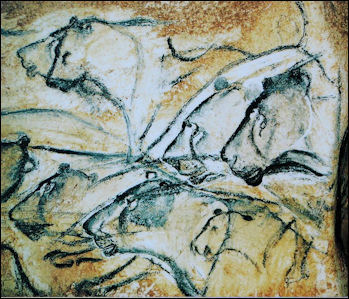
There is a story that Picasso, on seeing the cave paintings at Lascaux/Altimara said "we have learnt nothing in 12,000 years".  On the one hand, like many of these little stories, it may be apocryphal. On the other; if he had said it, he would have been right:

I thought the same thing, yesterday, on seeing Sophocles' "Antigone" at the National Theatre.  Fair enough, it is not 12,000 years old.  But it is still 2,500 years old.  It doesn't though, feel "dated" at all.

There has been a civil war in Thebes (Greek Thebes, not the Egyptian one) following the death of Oedipus.  Oedipus' two sons have been on opposite sides of the the war and, before the play opens, have managed to kill each other.  A chap called Creon (also related to Oedipus) becomes King and decides to restore some order.  He orders the burial of one brother, Eteocles, who was a good chap.  The other, Polyneices, though:
came back from exile, and sought to consume utterly with fire the city of his fathers and the shrines of his fathers' gods, sought to taste of kindred blood, and to lead the remnant into slavery
Not a nice guy.  Something must be done. Or rather, nothing: Creon decrees that no one should bury him.  

Antigone, daughter of Oedipus (we're talking Oedipus here: everyone's going to be related) disagrees.  You should bury the dead.  I hear your arguments about punishment and the security of the state and, well, you can stick them up your arse.  You should bury the dead and, you know what, I'm going to bury him.

Creon has a point.  For crying out loud, Polyneices was trying to destroy everything.  Burial, like a fair trial or not being tortured is all well and good; but aren't Antigone's objections like those "airy-fairy civil liberties" idealist liberals go on about?  Let us repeal the right to a burial act safeguard the lives and liberties of the citizens of Thebes.

Antigone also has a point.  You've just got to bury the dead.  Not to, like detention without trial, torture, suppressing civil liberties or allowing Bill Cash to decide what "rights" you have, is just immoral.  

Morality versus practicality: off we go.  Throwing in a few gods and the ancient Greek obsession with prophesy Sophocles just lets the story unfold from there.

And Sophocles not only lets a story run based on around major concerns of a society 2,500 years after his death but does it way better than most would do it today.  This is a Greek tragedy: it all ends horribly.  Nobody today seems to be able to "do" anything but a happy ending.  Hollywood, in particular, doesn't seem able to cope with anything but "uplifting".  This "it all works out well in the end" nonsense absolves the characters and, by proxy, us of responsibility for their and our actions.  In a Greek tragedy the consequences of actions come home to roost. Big time.

It's a great play and a great production.  A better, more relevant and more honest story than any likely to be served up today.  We have learnt nothing: and forgotten much.

Read More...